
Explore San Diego County People Directories
San Diego County people directories are split among agencies rather than kept in one master list. City pages publish department and selected staff contacts. County and state record systems list parties to deeds, parcel owners, case parties, registered businesses, and licensed professionals. Education directories organize schools and districts, while the library and archives preserve older resident lists. Each source answers a different question and exposes a different set of fields.
| Local directory | People or groups listed | Record keeper | How to use it |
|---|---|---|---|
| City department contacts | Departments and public office contacts | City of San Diego | Free online |
| City Planning contacts | Planning managers and program leads | City Planning Department | Free online |
| School Finder | Districts, public schools, charters, and programs | San Diego County Office of Education | Free online |
| Grantor and grantee indexes | People and entities named in recorded documents | County Recorder and County Archives | Web index, kiosk, copies, or archive |
| Property and tax sources | Owners, parcels, and tax mailing trails | County Assessor and Treasurer-Tax Collector | Phone, kiosk, and online tools |
| City directories | Past residents, businesses, addresses, and occupations | San Diego Public Library and City Archives | In person and selected years online |
| License and business searches | Licensees, registrants, entities, and local trade names | California DCA, Secretary of State, and County Clerk | Free searches; copies may cost |
For a public contact, begin with the city department directory and then move to a department staff page. For a property owner, use assessor or parcel data before checking recorder names. A past resident is more likely to appear in the library's city directory run, an obituary, or an old deed index. San Diego County has no verified open university-wide people directory or statewide employee phone book in the research, so neither is treated as a dependable general source.
San Diego City Staff Directory
The City of San Diego department directory lists office names, main phone numbers, and shared email addresses. It covers departments such as the City Auditor, City Clerk, City Planning, City Treasurer, Communications, and Development Services. This is an office-routing directory, not a name search of every city worker. It helps identify which department can answer a civic question or receive a request. The captured city directory shows how the municipal list is organized.
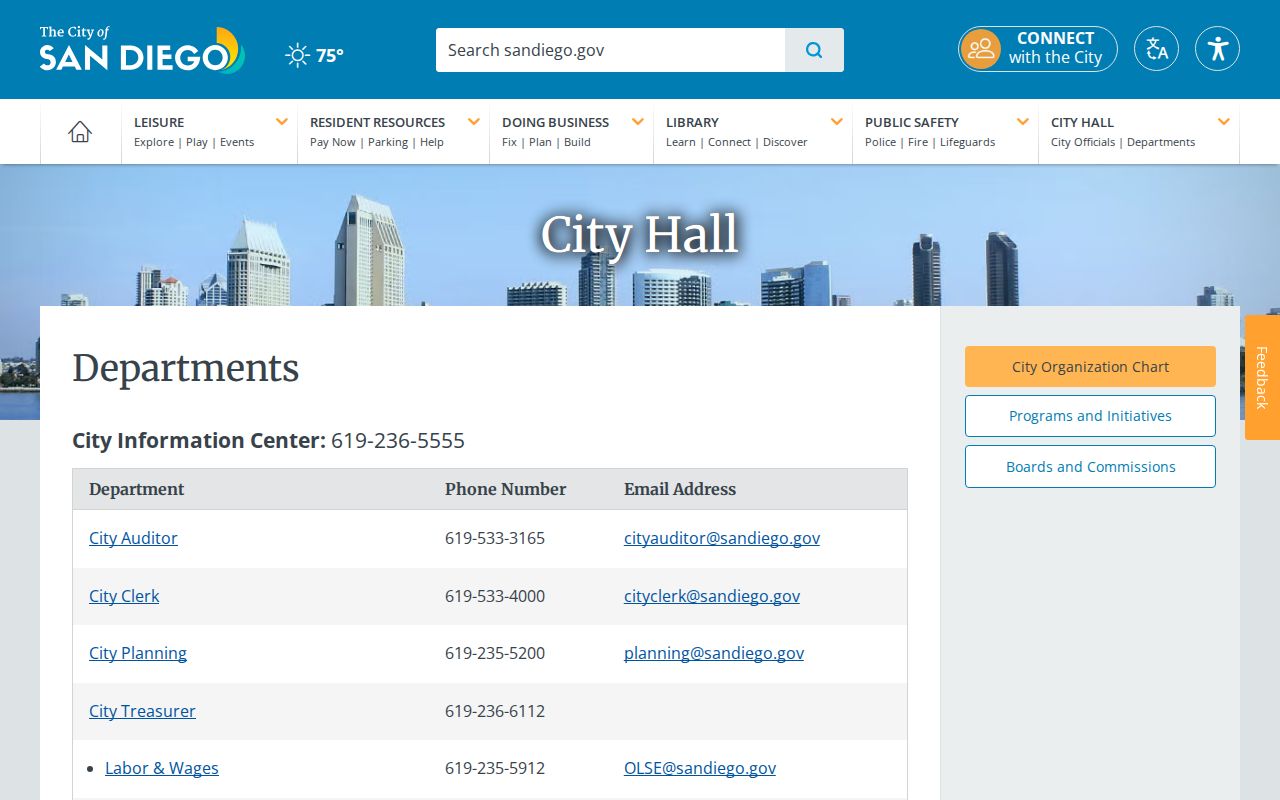
Those office-level contacts provide a sound fallback when no individual staff entry is published. Department-specific pages may go deeper. The City Planning contact directory publishes selected management and program contacts with direct official details. Its entry design is more useful than a bare phone list because it says what each person handles.
| Entry field | Format | What it tells you |
|---|---|---|
| Department | Office name | The unit responsible for the topic |
| Staff name | Full name | The listed public contact |
| Title | Director, deputy, or program role | The person's official function |
| Responsibility | Topic statement | Which questions should go to that contact |
| Email and phone | Official contact details | A direct or office communication route |
The live staff sample can be compared with the directory fields above.
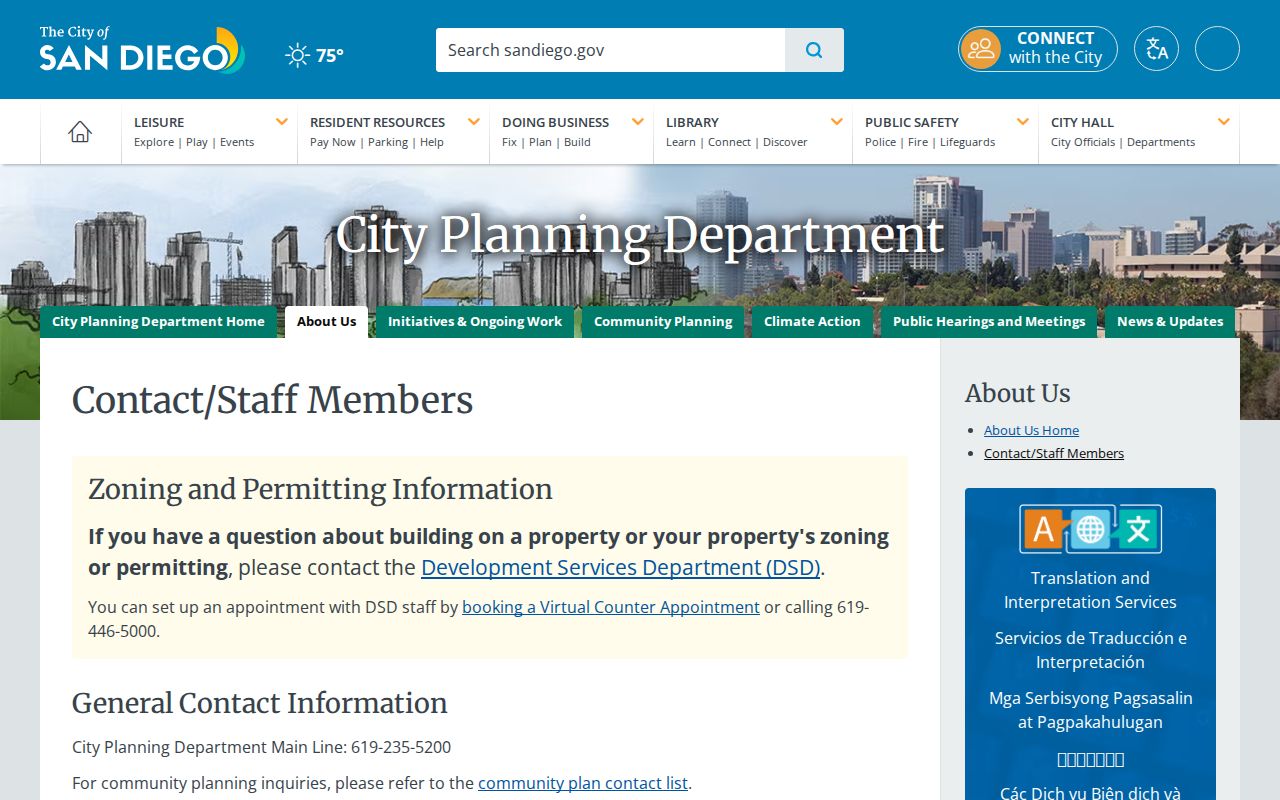
A typical entry includes a name, title, program area, work email, and work phone, but no personal address or private data. The published sample lists Heidi Vonblum as City Planning Director with PlanningDirector@sandiego.gov and 619-446-5363. It lists Tait Galloway as Deputy Director for Community and Mobility Planning, with General Plan questions routed to TGalloway@sandiego.gov and 619-533-4550.
San Diego County Education Directories
The San Diego County Office of Education School Finder is the broadest verified education directory in the county. It organizes school districts, individual public and charter schools, education programs, a district map, and separate district and charter listings. This is a directory of institutions and their public contacts, not a full roster of teachers.
The official School Finder screen shows the countywide scope of the education lookup.
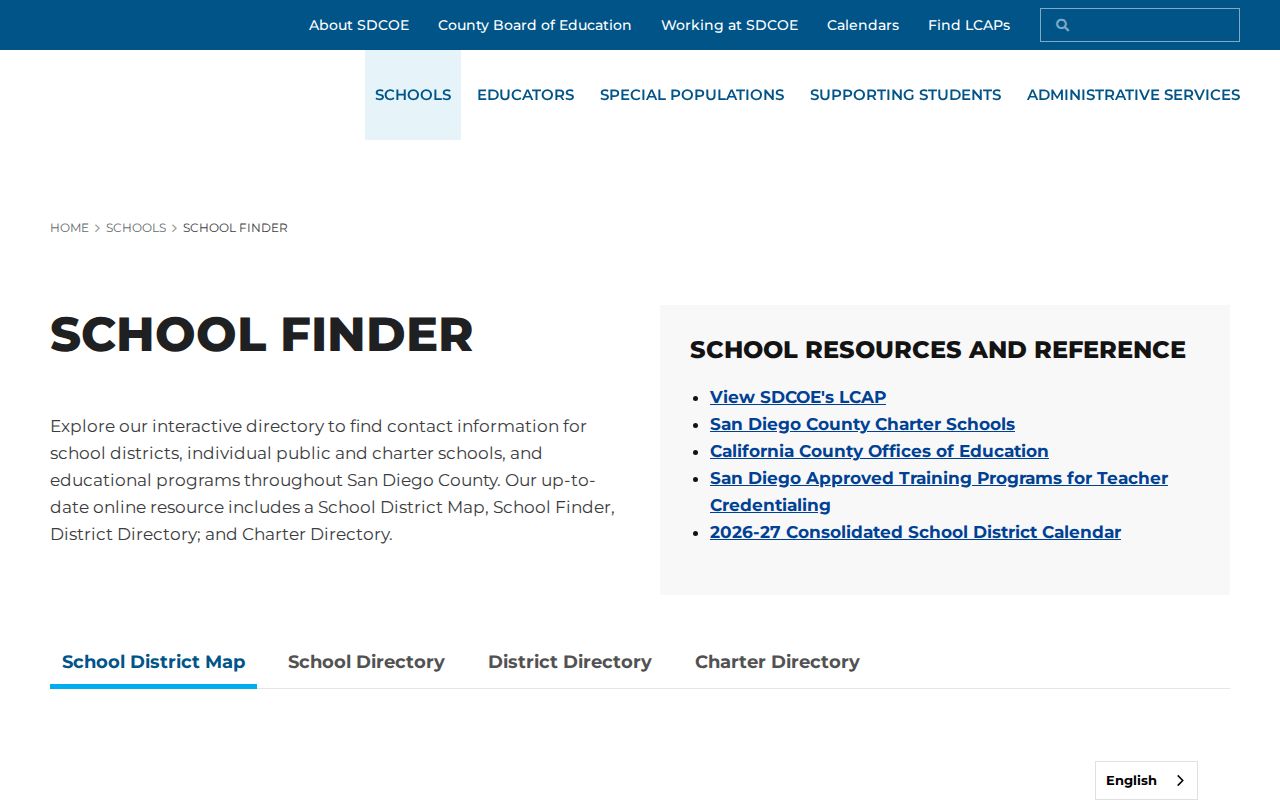
It is especially helpful when a San Diego mailing address does not make the responsible school district clear.
San Diego Unified's directory page supplies the district's main public contact, while some department pages publish their own phone and email details. The staff sign-in system requires an authorized ID, so it should not be confused with an open people directory. The California School Directory can add school and administrator data reported by districts. University names may appear through campus pages and archives, but the available research did not verify a standard field set for a countywide university directory.
San Diego County Records Name Directories
Several public record indexes work like people directories even though that is not their formal label. The Recorder's Official Records Index lists grantors and grantees in recorded real-property documents from 1970 forward. A grantor transfers an interest; a grantee receives it. Results can identify indexed parties, document type, document number, and recording date, but the web portal does not provide complete document images for free.
Older names remain available through County Archives. Its holdings include deeds from 1845 through 1930, grantor and grantee indexes from 1846 through 1969, official records from 1931 through 1989, and recorded maps. Researchers can also use public kiosks or order copies. The full access-law and copy-request process belongs with San Diego County public records access.
The Superior Court index is another name directory. It covers parties in civil, criminal, family, mental health, and probate matters, with online lookup noted for many files from 1974 forward. It is a case index, not proof that every allegation is true. Voter records are more restricted: California does not offer the voter file as an open public name list, and access requires an approved purpose and application.
Note: Recent recorder entries may take 24 to 48 hours to appear, so a fresh filing may not yet be indexed.
San Diego County Property Directories
Property sources connect people, parcels, and mailing routes. The San Diego County Assessor provides ownership and address information by phone and at public computer kiosks. Online tools supply parcel numbers, maps, characteristics, and value notices. A parcel is a mapped unit used for property tax records. The Treasurer-Tax Collector can search tax bills by parcel or bill number, mailing address, or unsecured bill number.
The mailing address and the situs address serve different purposes. Situs means the physical location of the parcel. A tax mailing address is where the owner's bill or notice goes, so the two may not match. SanGIS/SANDAG Parcel Lookup adds parcel shape and jurisdiction. Once the correct parcel is known, recorder names can reveal transfers and liens.
That split affects the next source. City of San Diego building and code files route through the city Accela system. Unincorporated land-use and development records use County Accela, which supports searches by site address, contractor license information, parcel number, or record information. Since December 9, 2024, APN searches have been removed from the online Official Records Index, but they remain available at five county office kiosks.
San Diego County Business Directories
Professional and business directories answer three separate questions: whether a state license is valid, whether a California entity exists, and who registered a local trade name. The Department of Consumer Affairs License Search reports license type, number, current or expired status, and discipline for professions handled by its boards and bureaus. BreEZe serves many of the same licensing and enforcement programs.
The Secretary of State bizfile search covers corporations, limited liability companies, and limited partnerships, with entity details and public filings where available. San Diego County fictitious business name records are separate. An FBN, or fictitious business name, is a local filing for a business operating under a name other than the owner's legal name. The County Clerk search may identify the trade name, registrant or owner, and filing data.
- License record
- A board's public entry for a regulated professional, including status and discipline when reported.
- Business entity
- A corporation, limited liability company, or limited partnership registered with the state.
- Fictitious business name
- A county filing that links a local trade name with one or more registrants.
- Agent
- The person or service designated to receive formal papers for a business entity.
These official directories can help verify a seller, identify the owner behind a local business name, or confirm a professional credential. They should be matched to the correct keeper because there is no statewide FBN registry.
Historical San Diego County Directories
The San Diego Public Library California Collection holds city directories from 1886 through 2021 in Central Library Special Collections. City directories came before modern phone books and commonly list residents and merchants by name, address, and occupation. Some volumes also contain business listings, spouse or widow notes, or reverse sections that start with an address.
The library's collection page displays the long run and its online access points.
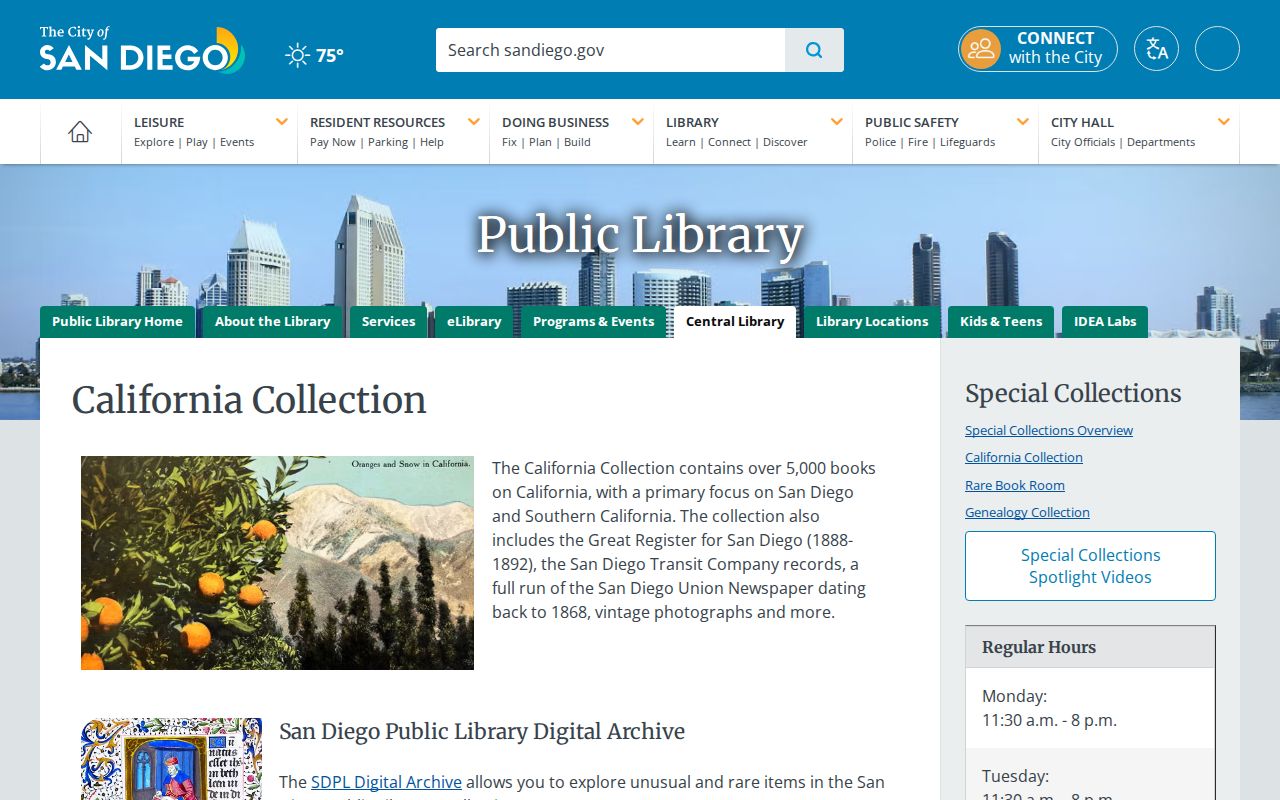
The page also routes readers to online groups at San Diego Yesterday for 1887 through 1925 and the City Archives for 1925 through 1960.
| 1845-1846 | County land names begin in deeds and grantor-grantee indexes. |
|---|---|
| 1865 | San Diego Union obituary microfilm begins its historical family trail. |
| 1886 | The library's San Diego city directory run begins. |
| 1970 | The Recorder's current online official-record index coverage begins. |
| 1974 | Online or court-location lookup is noted for many major court file types from this point. |
| 2021 | The library's listed city directory holdings reach this year. |
Old San Diego Address Directories
An old address can reconnect a family branch when a modern name search goes nowhere. Check the city directory nearest the known year, then compare nearby years for a move, spouse note, occupation change, or business listing. A reverse or criss-cross directory, when included in the volume, starts with the street address and names the listed occupant. Census schedules can fill ten-year intervals, while directories help bridge the years between them.
San Diego County geography changes the trail. Older core neighborhoods and coastal communities tend to appear earlier in city directories and newspapers. Newer inland subdivisions and unincorporated areas rely more on assessor maps, tax records, permits, and later directories. ZIP codes are delivery routes, not legal boundaries. A parcel map or city boundary should settle which agency held the record.
For a family-history search, pair the address with deed chains, probate case names, and the library's obituary microfilm. This combination can reveal an owner, a listed resident, relatives named in a notice, and the court file tied to an estate without relying on one all-purpose directory.
San Diego County Obituary Directories
The Central Library Genealogy Collection provides microfilm access to San Diego Union obituaries dating back to 1865. Obituaries can list relatives, former names, funeral arrangements, cemetery clues, military ties, and places of residence. The collection also includes more than 10,000 books, about a thousand periodical titles, and in-library access to genealogy databases.
San Diego History Center archives add personal papers, diaries, photographs, civic collections, and public-record finding aids. These are not universal directories, yet they can be rich named-person sources for early business, civic, and community history. Search by family name, place, and topic, then verify any relationship against a record created close to the event.
Note: Funeral-home notices and community archives can supplement official sources, but their coverage varies and each entry should be checked against its original publisher.
Limits of San Diego County Directories
No San Diego County people directory lists every resident. Government pages are built for public contact, so they show office details rather than private addresses. School tools emphasize institutions and district administrators. The recorder and court portals are indexes to events, not full biographies, and a name match alone does not establish identity. Common names, initials, compound surnames, and spelling changes require care.
Historical directories also reflect the publishing customs of their time. Coverage may omit people without a listed phone, residents who moved between editions, or household members not named as the main entry. Search Spanish compound surnames and particles such as De, Del, De La, or La in more than one form. For trust-held or business-held land, try the trust or entity name as well as the individual.
Commercial directory data can be stale, merged, or copied from old public sources. Official keepers are better for confirming a specific fact, though even official indexes can lag or contain errors. Match at least two fields, such as name plus department, address, parcel, profession, or date, before deciding that two entries refer to the same person.