
San Diego County Public Records Landscape
Each record set follows the law and procedure of its own custodian. The San Diego County Assessor/Recorder/County Clerk keeps recorded instruments, property information, county vital certificates, and several filing systems. The Superior Court controls case indexes and case files. Sheriff records use custody tools, open data, and Records & ID requests. California agencies add professional licenses, business entities, prison records, unclaimed property, and statewide vital records.
The table separates a free online index from the route used to see or obtain the underlying record. An index is a finding aid. It may show a name, date, document number, or case location without displaying the full document.
| Record Group | Official Keeper | Web Search | How Access Works |
|---|---|---|---|
| Deeds, liens, maps, other recorded instruments | Assessor/Recorder/County Clerk | Official Records Index, 1970 to present | Index online; images at public kiosks or by paid copy order |
| Civil, criminal, family, mental health, probate | San Diego Superior Court | Court Index and Online Case Search | Index online; hard-copy file at the proper court office |
| Property ownership, parcel, value, maps | County Assessor | Parcel and value tools | Online tools plus ownership and address help by phone or kiosk |
| Birth, death, marriage certificates | County Recorder/Clerk and CDPH | No broad public name index | Authorized or informational copy by eligible channel |
| Current jail and state prison custody | Sheriff and CDCR | Who's In Jail and CIRIS | Current lookup online; related reports use separate requests |
| Business entities and professional licenses | Secretary of State and DCA | bizfile and DCA License Search | Search free; copies or certificates may cost |
Some records remain restricted even when related index data is public. Examples include sealed and juvenile cases, confidential marriages, protected voter files, and sensitive identifiers removed by statute. A record's absence from a web search does not prove that no record exists. It may be offline, held under another jurisdiction, or available only through a defined copy process.
California Records Law in San Diego County
The California Public Records Act, Government Code sections 7920.000 through 7931.000, applies to identifiable, nonexempt records held by state and local agencies. Any person may make a request. The agency generally has 10 days to determine whether responsive records will be disclosed, and a limited 14-day extension may apply. That date is a determination deadline, not a promise that every copy will arrive in 10 days.
Use the Act for county or city administrative material such as contracts, policies, correspondence, logs, datasets, and department files that lack a special access system. Duplication charges are tied to direct costs. An agency may charge full costs when electronic extraction or computer programming is required. It may also withhold or redact material covered by an exemption or legal privilege.
- Custodian
- The office that keeps and controls a record.
- Index
- A searchable list of record facts, not necessarily the record image.
- Certified copy
- A copy formally authenticated by the issuing office.
- Exemption
- A rule that permits or requires material to be withheld.
Special systems take priority. Do not send a general county request for a court case file, certified vital certificate, or recorder copy when those custodians publish their own steps. The distinction saves time and keeps the request with the office authorized to act on it.
San Diego County Recorder Index Access
The Recorder's recording service provides an online index for recorded real-property documents from 1970 to the present. Web results show indexed facts rather than full images. Complete images require a purchased copy or a visit to a public kiosk. New recordings may take 24 to 48 hours to appear. Online orders require an account, are printed the next business day, and are sent by regular mail.
| Recorder Search Control | Use | Important Limit |
|---|---|---|
| Name, grantor, or grantee | Find a person or entity named in an instrument | Name mode normally needs an indexed party name |
| Recording date range | Narrow results by filing period | Recent instruments may not appear for 24 to 48 hours |
| Document type | Focus on deeds, liens, reconveyances, maps, or other classes | Party roles vary with the instrument |
| Document number | Locate a known filing or order a copy | Include the recording year in a mailed order |
| APN | Parcel-based official-record search | Removed from the web index; still available at five office kiosks |
Recorded copies cost $2 for the first page, $0.05 for each added page, and $1 per document for certification. A card payment adds a $2.50 surcharge. A mailed request should state the document number, recording year, one party's name, and document type, then go to Real Estate Records at P.O. Box 121750, San Diego, CA 92112-1750.
Current access change. APN searching left the online Official Records Index on December 9, 2024, under AB 1785. Parcel-number searches remain available at five Assessor/Recorder/County Clerk kiosks.
Property Records Across San Diego Geography
An address that reads "San Diego" may belong to city, county, postal, school, or special-district geography. The correct border determines which permit portal, police agency, or planning office holds the record. The SanGIS and SANDAG Parcel Lookup Tool connects an address to parcel geometry and public map layers. County Accela covers unincorporated planning and building matters, while City of San Diego Accela serves city building and code files.
The Assessor gives public ownership and address information by phone at 619-236-3771 and through office kiosks. Online parcel resources show APNs, maps, characteristics, and value notices. The Treasurer-Tax Collector also permits a bill search by parcel or bill number, mailing address, or unsecured bill number.
Keep the situs address separate from the mailing address. The situs address is the parcel's physical location. The mailing address is where tax correspondence goes, and it may point to a trust, an estate representative, a manager, or an owner elsewhere. Building files have their own release rules: owners, agents, companies, and trusts may need ID, authorization, or proof of an ownership interest.
Note: When a web parcel tool stops short, the Assessor phone line and office kiosks remain documented routes for ownership and address information.
San Diego County Court Record Channels
The San Diego Superior Court Online Case Search covers civil, criminal, family, mental health, and probate indexes. Searchers can use party name, case number, or a District Attorney case number. Party searches offer case type, case location, party role, filed-year bounds, last or business name, first name, and birth date. More letters in a name can make a crowded search faster and more precise.
An index hit commonly supplies the case number, parties, case type, filing date, location, and role. It does not guarantee online access to each pleading. Files from 1974 to the present for major case types may be found through the index or a court location. Some civil-limited and misdemeanor data may last only 10 years at certain locations. Juvenile cases and infractions are not included, and older information may be on microfilm. Court staff do not perform that microfilm research.
To view a hard-copy file, submit the court's file-view form and show valid photo identification at the proper business office. The court administrative-record request channel is different. Most case files are accessed through court-record procedures, not through an administrative request under the county portal.
San Diego County Vital Record Copies
The County Recorder/Clerk issues certificates for births and deaths that occurred in San Diego County and marriages licensed there. California uses an authorized-copy versus informational-copy model under Health and Safety Code section 103526. An informational copy is marked as not valid to establish identity. A confidential marriage certificate is narrower still: only a registrant or a person with a court order may obtain the certified certificate.
County fees are $34 for birth, $26 for death, and $19 for marriage. Requests may be made in person, online through VitalChek, or by mail. Authorized copies ordered by mail need the application, a notarized sworn statement, and certificate of acknowledgment. Informational-copy mail requests do not need that sworn statement. Online orders add the vendor's handling charge.
California Department of Public Health fees differ: $29 for birth, $24 for death, and $17 for marriage. CDPH also issues a $16 dissolution certificate for supported years. A divorce decree or judgment is a court record, so a San Diego filing belongs with Superior Court rather than the Recorder/Clerk. If the county finds no matching vital record, it issues a Letter of No Record and keeps the processing fee.
San Diego County Custody Record Lookups
Current county custody information comes from the Sheriff's Who's In Jail lookup. It is distinct from an arrest report, booking record, local criminal history, warrant record, or incarcerated person's medical record. Those materials go through the Sheriff's Records & ID Division and may carry requester or authorization rules. The central custody information line is 619-409-5000.
The Sheriff's live lookup shows the official entry point for current San Diego County jail information.
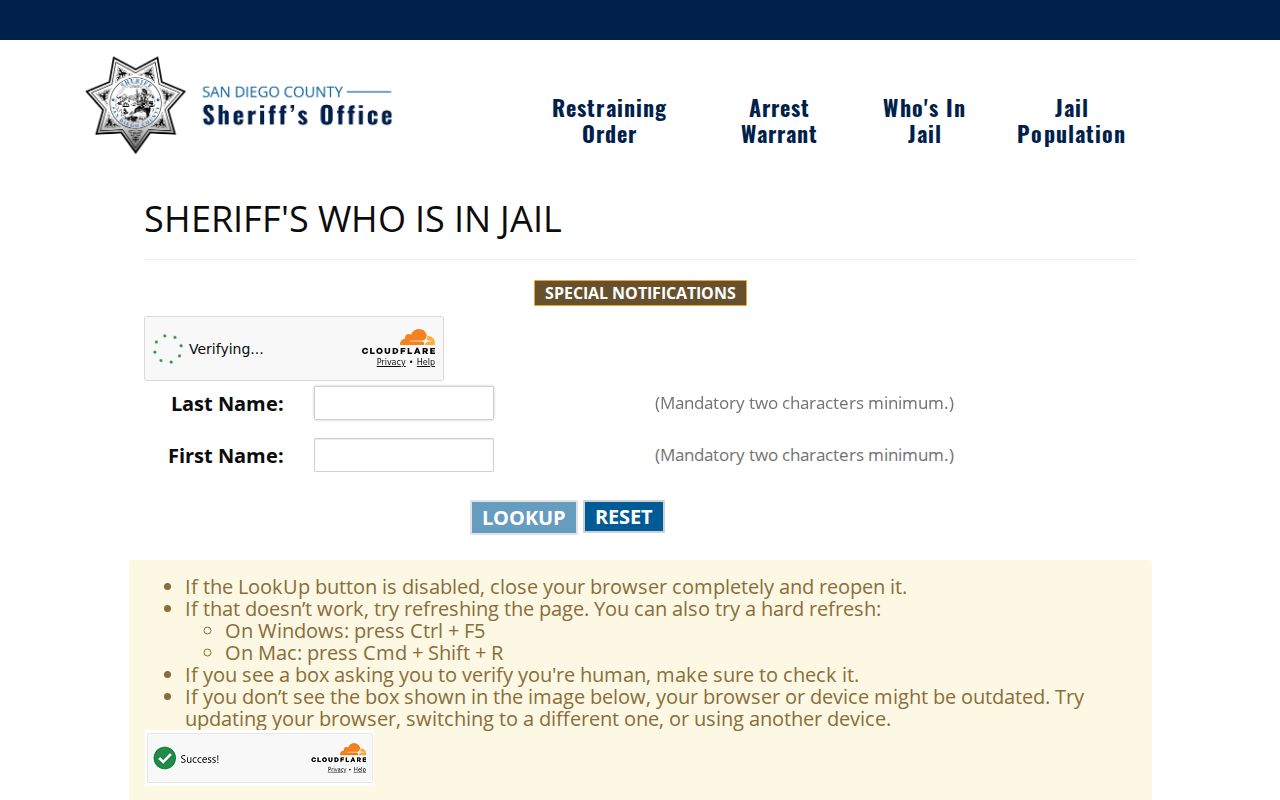
Use that custody result as a current status check, then request a separate report only from the agency that holds it. State prison custody belongs in CDCR's CIRIS, which can return a name, CDCR number, age, location, commitment county, admission date, and parole-hearing information.
The California Megan's Law registry is another state system with explicit legal warnings and daily law-enforcement updates.
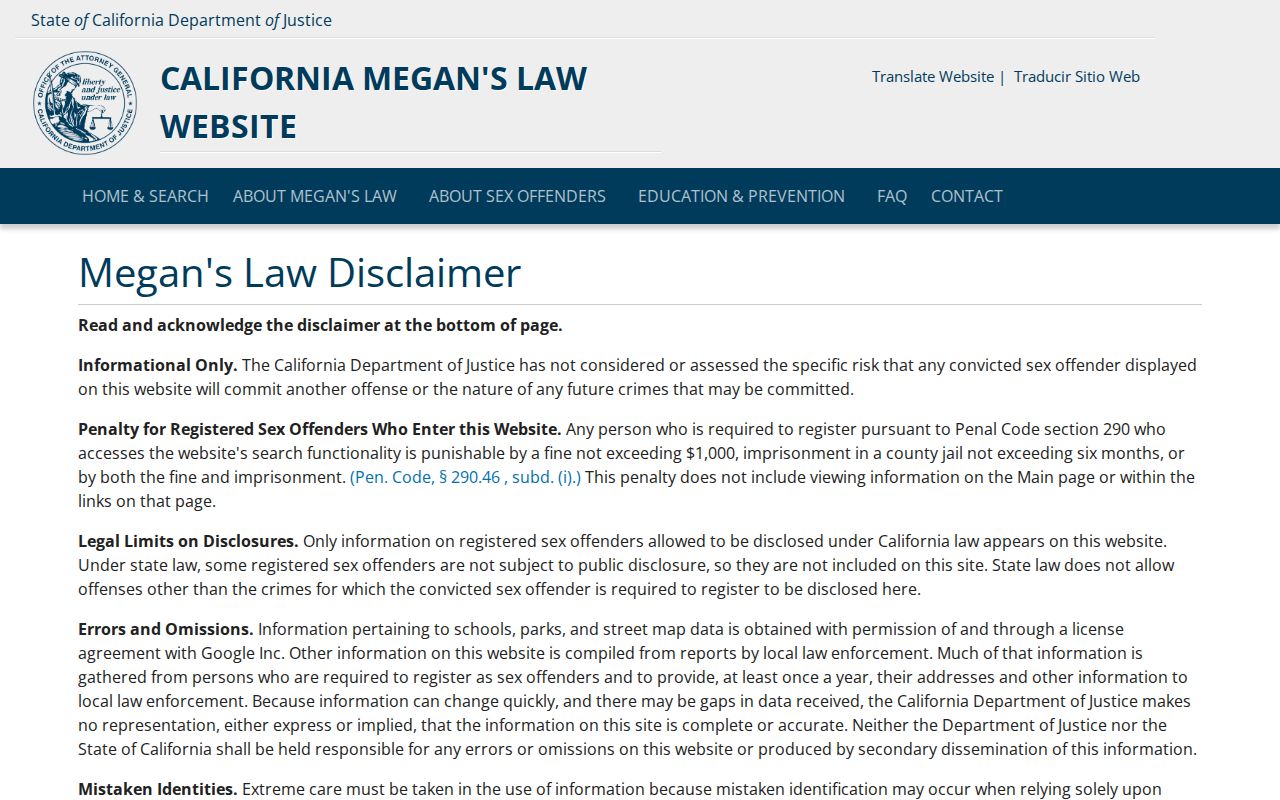
The registry is governed by Penal Code section 290.46 and must be used within its stated limits. Never use a public lookup to threaten, stalk, harass, or harm another person.
San Diego County Business Record Searches
California and county filings answer different questions. The Secretary of State's bizfile Business Search covers corporations, limited liability companies, and limited partnerships, including public status and filing details where available.
The state entity result can identify an entity number, status, agent or address, and available filings. A business using a fictitious name in San Diego County follows a separate County Clerk route. County FBN records can connect a trade name to its registrant or owner, and there is no single statewide FBN registry.
For licensed occupations, the California Department of Consumer Affairs License Search reports whether a license is current, expired, suspended, revoked, or otherwise subject to discipline under a participating board or bureau.
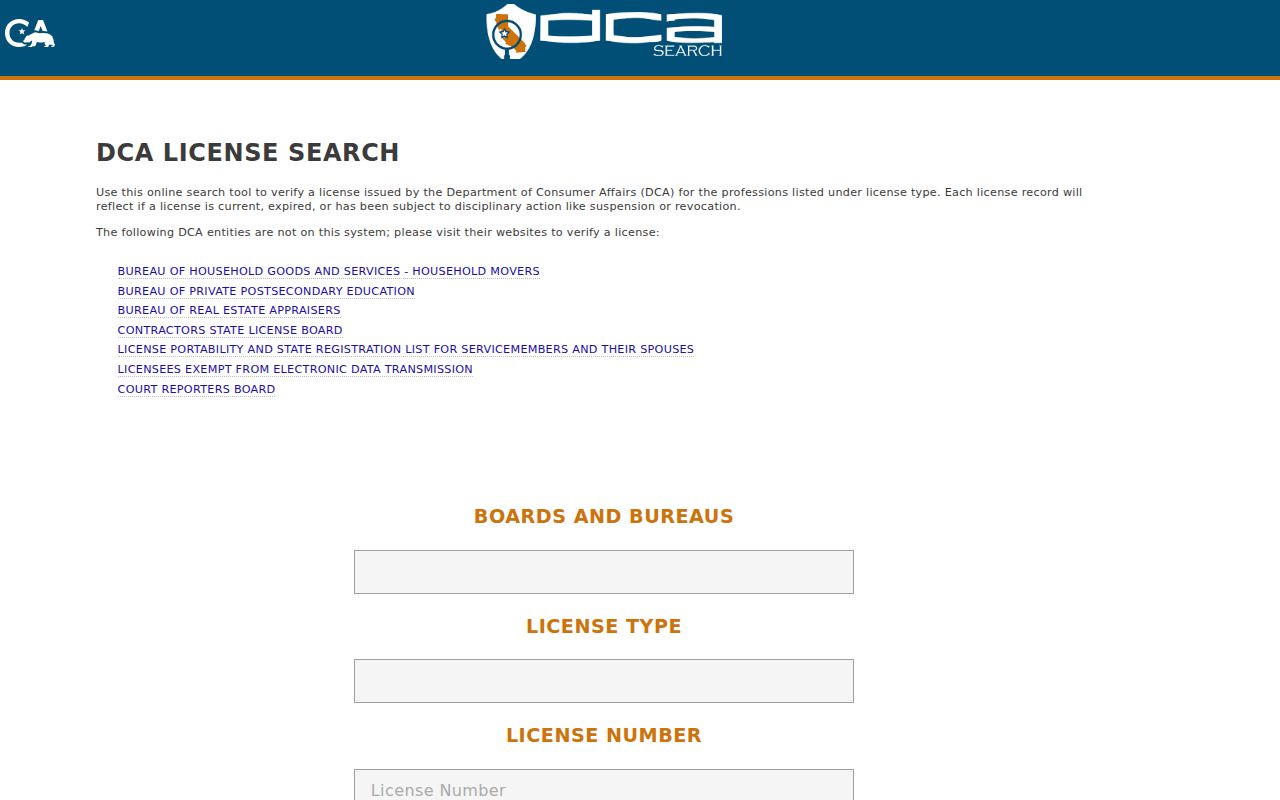
DCA results should be read with the license type and issuing board, since some fields and enforcement details vary. BreEZe supplies licensing and enforcement records for several boards. Searching a name, business, or license number can help verify a seller, contractor, or service provider through an official source.
Historic San Diego County Records Access
The online recorder cutoff does not erase the older land trail. San Diego County Archives identifies deeds from 1845 through 1930, grantor and grantee indexes from 1846 through 1969, a numeric index from 1872 through 1973, Official Records from 1931 through 1989, and recorded maps. Grantor means the person transferring an interest; grantee means the person receiving it.
These holdings bridge the years before the 1970 web index. Archives, office indexes, and historical repositories are therefore the fallback for an estate, heir, family-history, or old-property question. The San Diego History Center's deed-index description adds acreage or lots, transaction dates, and book-and-page references for many early entries.
A successful older-record search often needs more than a name. Approximate year, property description, known family member, deed role, or book-and-page citation can separate people with similar names. The continuity is unusual: county land-name records begin before California statehood and flow into modern official-record indexing.
San Diego County Public Records Offices
Use the office that created or now keeps the material. The Assessor/Recorder/County Clerk handles recorded instruments, property information, vital certificates, archives, and County Clerk filings. Superior Court controls case files. The Sheriff's office keeps custody, booking, crime, arrest, and related law-enforcement records.
Assessor/Recorder/County Clerk
Real Estate Records
P.O. Box 121750
San Diego, CA 92112-1750
619-236-3771 property information
San Diego Superior Court
Case files at the court location where the matter was heard
619-844-2233 administrative records
San Diego County departments also route administrative requests through a central portal. City departments, police files, and city building records remain separate even when the postal address says San Diego.
Request San Diego County Public Records
Use the San Diego County NextRequest portal only after ruling out a specialized index or copy channel. A focused request names the department, date range, subject, record type, and any known file, parcel, incident, or contract number. Ask for existing records. Agencies do not have to create a new analysis merely because a requester would find it useful.
- Identify the custodian. Separate county departments from the Recorder, Superior Court, city offices, Sheriff, and California agencies.
- Check the official portal first. An index, open-data file, published report, or copy form may answer the request at once.
- Describe the records narrowly. Give names, dates, topics, locations, and known identifiers, but do not send needless sensitive data.
- Choose electronic delivery when practical. Ask about direct duplication, extraction, programming, or certification costs before work begins.
- Review the determination. If records are withheld, read the cited exemption, clarify the scope, or narrow an overbroad request.
The 10-day CPRA period concerns the agency's initial determination. Large searches, review for exemptions, and redaction can extend production. A clear scope helps the custodian find responsive files and estimate cost.
Lawful personal use. Open access does not permit intimidation, stalking, harassment, or doxing. Respect court restrictions, protected addresses, and every warning shown by the source system.